Two weeks ago, I finished the 10th re-read of my favorite book, too busy with school to pick up a new one. Rather than use my energy to start another one, I picked up my phone, scrolled through Instagram, and encountered something I personally had been looking for since eighth grade. Pagebound, the 2025 app described by its founders as “if Goodreads and Reddit had a baby,” is a breath of fresh air for virtual and physical readers alike.
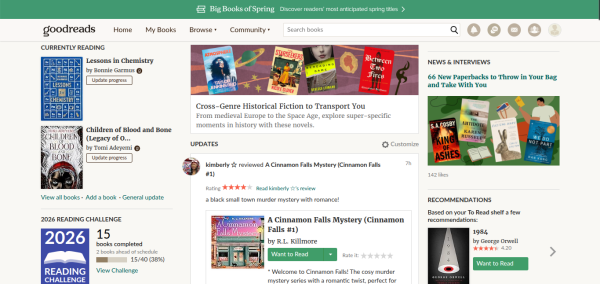
The competition-like discussion between Pagebound and Goodreads comes from social media discourse around the best way to keep track of new reads. Launched in 2006 by Otis and Elizabeth Chandler, Goodreads has for many years been a source of meeting for readers to review and mark books as finished to add to a library, but Pagebound takes it a step further.
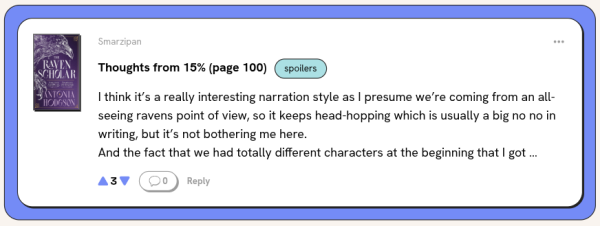
By including the Discuss tab, users can publish a thought about their books at any point when reading and receive upvotes, downvotes, and comment replies.
Pagebound has a leg-up in creating mini communities around any book imaginable. “Six of Crows,” a book I finished months ago, appeared under Discuss and provided a fresh perspective on the morally grey main characters I once forgot about.
Well-situated in our current social climate, Pagebound is seen as an application made for women, by women and it has partly blown up because of the duo of women behind it. Meeting them comes in the form of suggested profiles to follow upon creating an account: ‘lucyPagebound’ and ‘jenniferPagebound,’ referring to founders Lucy Zhao and Jennifer Dobak.
After importing a library from either Goodreads or The StoryGraph, two commonly used book tracking apps, users can expect to wait a few minutes for their books to upload. Reloading will allow them to see all the reads they’re familiar with.
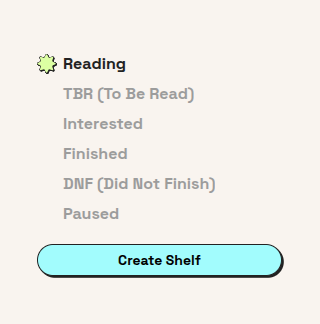
A surprising and pleasant experience, the library is sorted into 6 sections: Reading, TBR (To Be Read), Interested, Finished, DNF (Did Not Finish), and Paused. For members of BookTok and Bookstagram communities, these terms are familiar in their vernacular as interest in books is not always clear-cut. Where Goodreads’s sections consist only of Want to Read, Currently Reading, and Read, Pagebound allows for nuance and increased exploration.
While Pagebound can be accessed on the Web, under its URL of pagebound.co, the company released its app in late September 2025 and in doing so, grew its audience substantially.
The app itself provides a very smooth tactility, ombre background, and variation in Sans Serif fonts that lends a more fun-filled experience than expected. The user interface (UI) includes the homepage to access the aforementioned features of logging books under Library, finding new reads under Discover, and engaging with other readers under Discuss. The More tab brings users to a plethora of other resources including setting a yearly reading goal and a plan to achieve that goal, and viewing announcements by Pagebound’s founders.
To gain an even better experience with Pagebound, the brand also promotes a Pagebound Royalty plan for ten dollars a month and leans into its female founding and anti-AI mission to do so.
As Pagebound is a fairly new application, it’s harder to gravitate towards it when I’ve had such a persistent connection to Goodreads for years. That being said, if I had to rate this app, I’d give Pagebound a 4.5 out of 5.
Pagebound’s ability to build a colony around every book that’s been marked as Read on their platform impresses me and makes me excited to find and take part in discussions surrounding my next read.